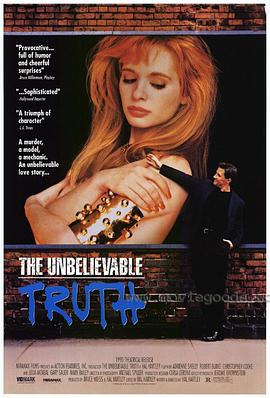
Fraught with over obvious symbolism, Hartley's early feature is nonetheless a joy to watch. Hal here shows us his uncanny ability to cast his characters perfectly came early in his career. Adrienne Shelley is a near perfect foil to herself, equal parts annoying teen burgeoning in her sexuality (though using sex for several years); obsessed with doom and inspired by idealism gone wrong she is deceptively – and simultaneously – complex and simple. Her Audrey inspires so many levels of symbolism it is almost embarrassingly rich (e.g., her modeling career beginning with photos of her foot – culminating her doing nude (but unseen) work; Manhattan move; Europe trip; her stealing, then sleeping with the mechanics wrench, etc.) As Josh, Robert Burke gives an absolutely masterful performance. A reformed prisonerpenitent he returns to his home town to face down past demons, accept his lot and begin a new life. Dressed in black, and repeatedly mistaken for a priest, he corrects everyone (I'm a mechanic), yet the symbolism is rich he abstains from alcohol, he practices celibacy (is, in fact a virgin), and seemingly has taken on vows of poverty, and humility as well. The humility seems hardest to swallow seeming, at times, almost false, a pretense. Yet, as we learn more of Josh we see genuineness in his modesty, that his humility is indeed earnest and believable. What seems ironic is the character is fairly forthright in his simplicity, yet so richly drawn it becomes the viewer who wants to make him out as more than what he actually is. A fascinatingly written character, perfectly played. The scene between Josh and Jane (a wonderful, young Edie Falco . . . You need a woman not a girl) is hilarious . . . real. But Hartley can't leave it as such and his trick, having the actors repeat the dialogue over-and-over becomes frustratingly arty and annoying . . . until again it becomes hilarious. What a terrific sense of bizarre reality this lends the film (like kids in a perpetual am notare too argument). Hartley's weaves all of a small neighborhood's idiosyncrasies into a tapestry of seeming stereotypes but which delves far beneath the surface, the catalyst being that everyone believes they know what the unbelievable truth of the title is, yet no two people can agree (including our hero) on what exactly that truth is. A wonderful little movie with some big ideas.
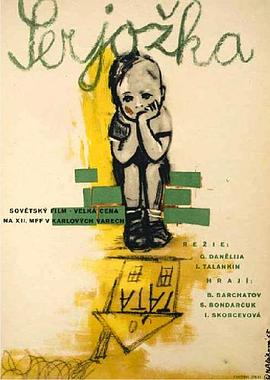
1960年捷克卡罗维发利国际电影节最佳导演水晶球奖。 Originally titled Seryozha, the Russian A Summer to Remember was co-adapted by Vera Panova from her own short story. War and Peace director Sergei Bondarchuk plays the new stepfather of young Seryozha (Borya Barkhatov). So close do the stepfather and the boy become in the months following their meeting that, when time comes for the boy to move on in life, he refuses to leave his new dad's side. Their summer idyll takes place on a Soviet collective farm, managed by Bondarchuk and depicted by novice filmmakers Georgiy Daneliya and Igor Talankin in the most glowing and apolitical of terms. Though there isn't much to the plot, the film admirably succeeds as a sort of cinematic tone poem. From All Movie Guide Russian filmmaker Georgi Daneliya ranks among his country's most popular directors of satirical comedies. The Georgia-born Daneliya comes from a distinguished family of film performers; his grandmother, Veriko Andzhaparidze, was a famed Georgian silent film actress, his cousin, Sofiko Chiaureli, is also a major actress, and his mother, Meri Andzhaparidze, spent more than a decade at Mosfilm Studios. However, he first chose to train as an architect (perhaps out of respect for his father, an engineer). Following his graduation in 1955, Daneliya worked only briefly in that field when he decided he'd rather be in films, enrolling in Mosfilm Studios' Directors' Courses in 1958. In 1960, Daneliya co-directed SeryozhaA Summer to Remember with Igor Talankin. Two years later, he made his solo directorial debut, Put K PrichaluThe Way to the Wharf (1962). His 1969 comedy Ne Goryuy!Don't Worry! successfully blended humor and melancholy, a device that would become Daneliya's trademark. In addition to directing, Daneliya co-authors the scripts for his films and occasionally works on screenplays for other directors. Daneliya has won numerous national and international awards for his work. In 1964, his Ya Shagayu po MoskveI Walk Around Moscow received an honorable mention at the Cannes Film Festival, while in 1975 Afonya received a special award at the All Union Festival, a major U.S.S.R. event. Daneliya's biggest hit in the U.S.S.R., Mimino (1977), earned the special prize at the Moscow International Film Festival and the U.S.S.R. State Prize. In 1991, Daneliya earned the Nika Award (the Russian equivalent to an Oscar) for Best Screenplay for Pasport (1990).
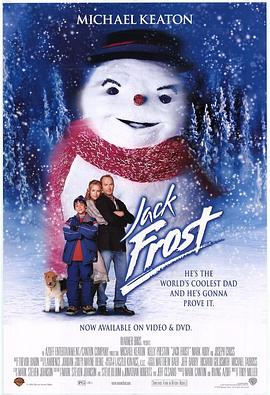
杰克(迈克尔·基顿 Michael Keaton 饰)是一位功成名就的音乐家,在事业上取得了硕大的成功,这也就意味着,他牺牲了大部分陪伴家人的时间,杰克的儿子查理(约瑟夫·克罗斯 Joseph Cross 饰)对此一直感到闷闷不乐。某日,杰克回到家,和查理一起堆了一个大雪人,杰克送给查理一只口琴,父子之间许下承诺。 圣诞节将至,杰克决心和家人们共同度过这个温馨的节日,然而,就在他驱车回家的路上,发生了严重的车祸,杰克亦因此丧命。失去父亲的悲痛和绝望笼罩着查理,整整一年,查理的家庭都生活在悲怆而又压抑的气氛中。一晃眼,圣诞节又到了,查理想起了和父亲的约定,他堆了一个雪人,然后吹响了父亲送给他的口琴,希望父亲能够如同承诺的那样,再度回到他的身旁。
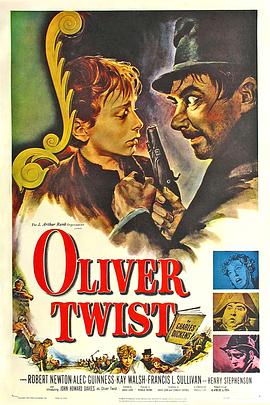
奥利弗(约翰·霍华德·戴维斯 John Howard Davies 饰)一出生就被抛弃,在孤儿院生活了九年之后,他被送到了棺材铺当学徒。无法忍受苦不堪言的生活,奥利弗从师傅的身边逃跑来到了巴黎,在那里,他结识了扒手法钦(亚利克·基尼斯 Alec Guinness 饰)。就这样,奥利弗被迫开始了自己的扒手生涯。 一次偶然中,奥利弗被警察逮捕,所幸得到了好心的老先生布莱罗(亨利·斯蒂芬森 Henry Stephenson 饰)收留,一辈子颠沛流离的奥利佛总算体会到了家的滋味。不幸的是,扒手团伙却不愿意放过奥利弗,他们绑架了他,其中,一个名叫南希(Kay Walsh 饰)的女孩对奥利弗心生恻隐,她决定不惜违抗老大的命令,尽自己所能帮助这个可怜的孩子。