Director YOON Seongho was offered to make this film because the indie-sitcom was too big to be seen on a computer. It had to be seen bigger in a feature film. It contains his confession-like dialogue and cold, sharp introspection.
故事发生在风景秀丽的密西西比河畔,汤姆(乔纳森·泰勒·托马斯 Jonathan Taylor Thomas 饰)自幼丧母,是一个身世可怜的孤儿。然而,在朋友和亲戚们的帮助和扶持下,汤姆还是成长为了一个快乐勇敢的男孩。哈克贝利(布拉德·兰弗洛 Brad Renfro 饰)是汤姆最好的朋友,两个孩子在一起,常常惹出各种各样的麻烦,闹了数不清的笑话。 一次偶然中,汤姆竟然成为了一宗凶杀案的目击证人,由于害怕遭到凶手的报复,汤姆和哈克贝利决定离家出走,踏上逃亡的旅途。汤姆的失踪让亲人倍感焦急,可他却在孤岛上开辟了自己的小天地,过得逍遥快活。最终,在案件即将审判之时,汤姆站了出来说出了真相,帮助法官做出了公正的判决。
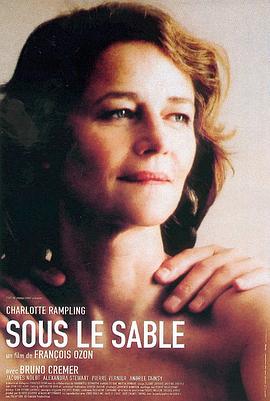
主授英国文学的大学教授玛丽(夏洛特·兰普林 Charlotte Rampling 饰),在其端庄切不可侵犯的外表下,隐藏着沉睡已久的蓬勃欲望。她与丈夫让(布鲁诺·克雷默 Bruno Cremer 饰)几十年的生活平淡如水,波澜不惊。这一切,却被丈夫的失踪击得粉碎。某个海滨的早晨,让独自离开度假小屋,一去不返。在此之后,玛丽似乎竭力控制着自己的情感,她设想丈夫仍在身边,每天陪她逛街、采购、聊天,生活一如既往。 不久,一具尸体被打捞上来。玛丽的自我麻痹结束,她开始试图了解丈夫的一切,却发现夫妻俩的隔阂与疏离如此之深。而在这一过程中,关于让的行踪也变得扑朔迷离,或生或死,永无定论……
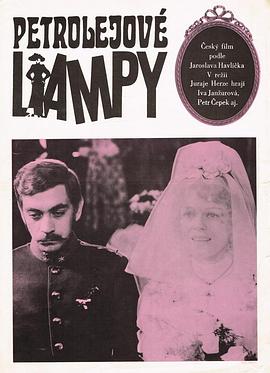
In small czech town named Jilemnice live unfortunate, but brave and jovial woman Štěpa Kiliánová, whose only desire was to fill the void in her virgin life. In despair and excessive trust, she married a sardonic, reclusive man, former lieutenant and gambler Pavel Malina, whose only wish was finally found peace and forgetting the past. They lived through unrequited love, dislike and disappointment. But no one knew that her groom begin to show signs of cerebral disease, which in the coming years engulf his sanity.
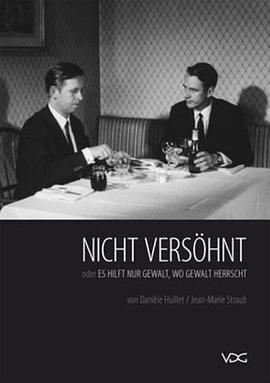
The subtitle of Jean-Marie Straub and Danièle Huillet’s first feature, from 1965, “Only Violence Helps Where Violence Reigns,” suggests the fierce political program evoked by their rigorous aesthetic. The pretext of the film, set in Cologne, is Heinrich Böll’s novel “Billiards at Half Past Nine,” which they strip down to a handful of stark events and film with a confrontational angularity akin to Bartók’s music that adorns the soundtrack. The subtlest of cues accompany the story’s complex flashbacks. The middle-aged Robert Fähmel tells a young hotel bellhop of persecutions under the Third Reich; his elderly father, Heinrich, an architect famed for a local abbey, recalls the militarism of the First World War, when his wife, Johanna, incurred trouble for insulting the Kaiser. A third-generation Fähmel is considering architecture, just as the exiled brother of Robert’s late wife, returns, only to be met by their former torturer, now a West German official taking part in a celebratory parade of war veterans. Straub and Huillet make the layers of history live in the present tense, which they judge severely. The tamped-down acting and the spare, tense visual rhetoric suggest a state of moral crisis as well as the response—as much in style as in substance—that it demands.