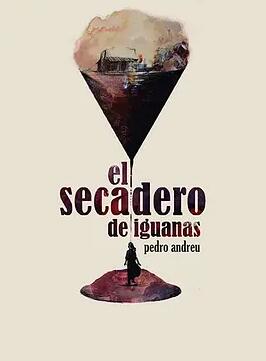
A bar in the middle of nowhere. A girl facing her demons. Her twin brother. An incestuous relationship. A mother they never met. A violent, alcoholic father. The nomads' periodic visitatio
May 1945: the end of the Second World War in the Tyrolean Alps. SS man Anton has deserted and been shot. On the run from his unit, he swaps his SS uniform for that of a dead Wehrmacht soldier and discovers a lonely mountain hut. Hannah, a Jewish woman, is hiding here. She takes Anton in and tends to his wounds.
But there is great mistrust between the two. Together they cope with the harsh everyday life in the remote hut. They are looked after by 16-year-old peasant girl Charlotte, whose family pays Hannah not to betray them. And at night, they hear fighting between the German troops and Italian partisans. Over time, a cautious familiarity develops between Anton and Hannah - he, who has done terrible things in the war, she, who has lost her family and has been struggling with fear and loneliness up here in the mountains for months. They grow closer. Hannah finds out that Anton was no ordinary soldier. He was in the SS, a man of conviction, at least at first. Brutal truths come to light. The war is as good as over, but what kind of future awaits them?
Georg turns up at the hut: He's been looking for Anton, hunting him down. He was the one who shot Anton - his best friend. Georg is fighting a battle that has long been hopeless, driven by hatred and the will to destroy. And he also wants to kill Hannah. High in the mountains, the decision is made.
The Deserter is a story about war and guilt, but also about helpfulness and humanity.
Nothing is more frightening, as the narrator points out, than a ‘time-rich nosy person’. Exhibit A is Ahn Geo-ul (Gyeong Su-jin), who commits herself to social justice causes with terrifying tenacity. After temporarily renting a unit in the Baek-sae Apartment building, she discovers that a loud, hard to locate banging noise occurs from 4am every night, making the residents’ lives an insomniac hell – and so she determines to engage in her own disruption and to find the culprit of this acoustic assault, simultaneously eliminating her eccentric neighbours as suspects, and recruiting them to her cause.
Focusing on a woman who is an unstoppable force for good, it is also a plea for community cohesion and solidarity.
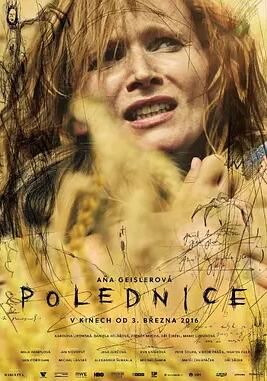
Eliška moves back with her daughter Karolínka to her husband’s native village. But something strange is going on and, as the temperature rises, Eliška becomes increasingly jittery. Fear is all-pervading and spectres move freely between dream and reality. The Noonday Witch is both an atmospheric horror film and a psychological drama, deftly toying with the viewer’s senses.
Francesca always attracted weirdos. When one of her stalkers is found dead, she looks for comfort from her best friend, Maxi. Meanwhile, Maxi’s grandfather, Jack, a disgraced Rabbi, comes across a reclining chair containing a Dybbuk inside. Jack and his voodoo sorceress partner try to find out where the recliner has been delivered while exploring Jack’s newfound gift for communicating with the other world. Meanwhile the reclining chair becomes enchanted by Francesca and starts committing crimes of passion. ×
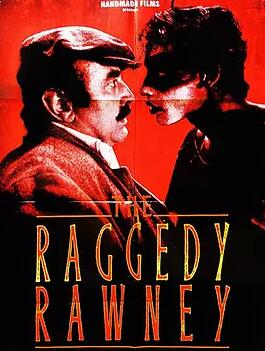
Acclaimed actor Bob Hoskins made a striking directorial debut with this curiously captivating fable that plays freely with gender, fantasy, and magic. Stationed somewhere in Eastern Europe, a young soldier (Dexter Fletcher) defects after his sergeant is killed in battle. Shell-shocked, mute, and disguised in women’s clothing, he joins a traveling Romani caravan (with Hoskins himself playing the band’s leader) after they mistake him for a “rawney”—a vagabond female mystic able to foresee the future.
In the film, a team of Special Forces commandos are in the middle of an operation when they’re abducted by a mysterious spacecraft. When they wake up aboard the ship, they quickly discover they are being hunted by a merciless alien race.
Seen from the perspective of a law enforcement officer, the heads of a criminal network and its victims, John Swab’s kinetic, pulse-raising thriller details how fentanyl is crippling the American heartland and pushing US society perilously close to the point of collapse.
1954年德国,德国国家足球队在瑞士打入世界杯决赛。德国鲁尔区埃森,人们都聚在理查德·鲁班斯基(彼得·罗美尔 Peter Lohmeyer饰)经营的小酒馆里欣赏电视转播。店主理查德曾在苏联的战俘营被关押了11年,性格保守固执。他的小儿子马蒂亚斯(路易斯·克拉姆罗特 Lo uis Klamroth饰)把德国球员赫尔穆特视为偶像,千方百计想去瑞士为他捧场。与此同时,《南德意志报》的体育记者保罗·阿克尔曼(卢卡斯·格雷戈霍威茨 Lukas Gregorowicz饰)正与未婚妻筹备婚礼,突然接到赴伯尔尼采访的任务,于是将蜜月旅行改在瑞士。7月4日德国队和匈牙利队进行最后决赛的前夜,父亲终于带着儿子前往伯尔尼,感受这场发生在伯尔尼的奇迹。
这部触动人心的运动题材电影《伯尔尼的奇迹》,不仅是一部让人热泪盈眶的温暖家庭剧,更是一部见证德国战后重建历史,以足球比赛帮助民族走出创痛、弥合裂痕、重拾自信的动人故事。故事围绕着1954年德国出其不意战胜匈牙利、夺得世界杯冠军的真实事件改编。本片荣获2003年第16届欧洲电影奖最佳摄影提名。