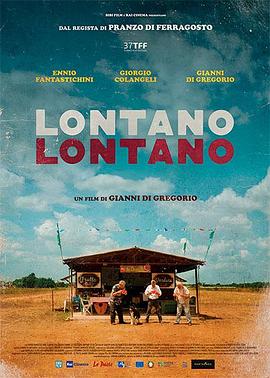
It’s never too late to make a change in your life. Attilio, Giorgetto, and the “Professore,” three retired men from Rome, are tired of their daily struggle; they dream of escaping to someplace exotic. They begin to save up the necessary money but it’s hard to break their habits. Di Gregorio continues his story of harmlessly eccentric men. With him, Giorgio Colangeli and Ennio Fantastichini in his last, very dynamic performance.
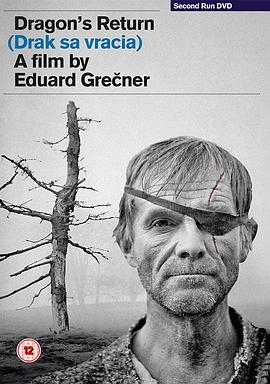
与Stefan Uher和Elo Havatta一样,Eduard Grecner也是60年代斯洛伐克新浪潮电影的缔造者之一。他的三部影片《一周七天》(1964)《尼绒月亮》(1965)和这部《徳拉克的回归》都是斯洛伐克新浪潮电影的代表作。这部叙事方法独特带有明显意识流风格的黑白影片甚至间接影响到了后来法国导演格里耶在捷克拍摄的两部影片《说谎的人》和《Eden and After》。 A special place in the development of feature films is reserved for Eduard Grecner, the creator of just one good film, Dragon Returns (Drak sa vracia, 1967), titled after the nickname of the lead character. After his initial work with Uher, Grecner made his mark as a proponent of the so-called intellectual film, the antithesis of the sociologically, or rather, socially critical film. Grecner's great role model was Alan Resnais, a young French filmmaker who sought to introduce Slovakia to the idea of film as a labyrinth in which meanings are created not by stories, but by complex configurations of dialogue, shots, and various layers of time, thus differentiating film from both literature and theater. In Dragon Returns―the story of a solitary hero who is needed by villagers living far in the mountains, but who is rejected by them at the same time because of his detachment―Grecner brought the tradition of lyricized prose to life through a whole series of formal aesthetic techniques. Alain Robbe-Grillet immediately developed this idea in the film shot in Bratislava The Man Who Lies (Slovak Muz, ktory luze; French title L'homme qui ment; 1968), and perfected it in Eden and After (Eden a potom, 1970).
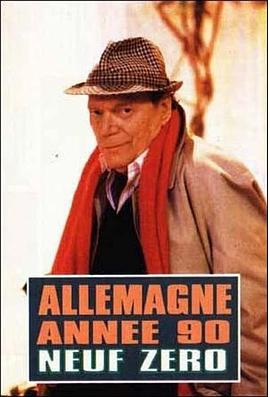
Characterized by deconstructivism and philosophical references and by briefly exposing the good, bad, and ugly periods of the country's history, this post-modern film portrays the abstract need for guidance of Germany following the fall of the Berlin Wall.
Moving to Portland, Oregon and finding work in food service is easy for Paul and Ramona. A struggling musician without bandmates, Paul becomes introverted and moody. Ramona's friend from college introduces her to a new social circle and she goes out while Paul stays home. When Ramona confronts turning thirty, it's time to grow beyond old routines and her relationship with Paul comes to a head. Paul and Ramona, a young couple in need of a change, move to Portland, Oregon from their hometown of Boise. Upon arriving, they sublet an apartment and begin to familiarize themselves with the city. While finding work is easy (Ramona begins waitressing, while Paul gets a job at a coffee shop), change is difficult. Their life in this new city seems to be on repeat. When their car breaks down and a tandem bicycle becomes their primary means of transportation, Ramona refuses to ride. A struggling musician, Paul, spends most of his time at home, steadily becoming introverted and moody, while Ramona, at the insistence of a co-worker, is thrust into a new social circle, where she begins an affair with a co-worker. Ramona and Paul’s relationship implodes after she confesses and in the ensuing conflict, she impulsively leaves to stay with a friend. Paul, desperate to work through the pain of the split, befriends a quirky barista named Ali. This friendship gives him a chance to begin to heal and inspires him to focus on expression through his music.